Illustrative image. Exact appearance, accessories, finish and markings must be confirmed against the quoted model.
Gas Detection InstrumentsFAMILY / GAS-006
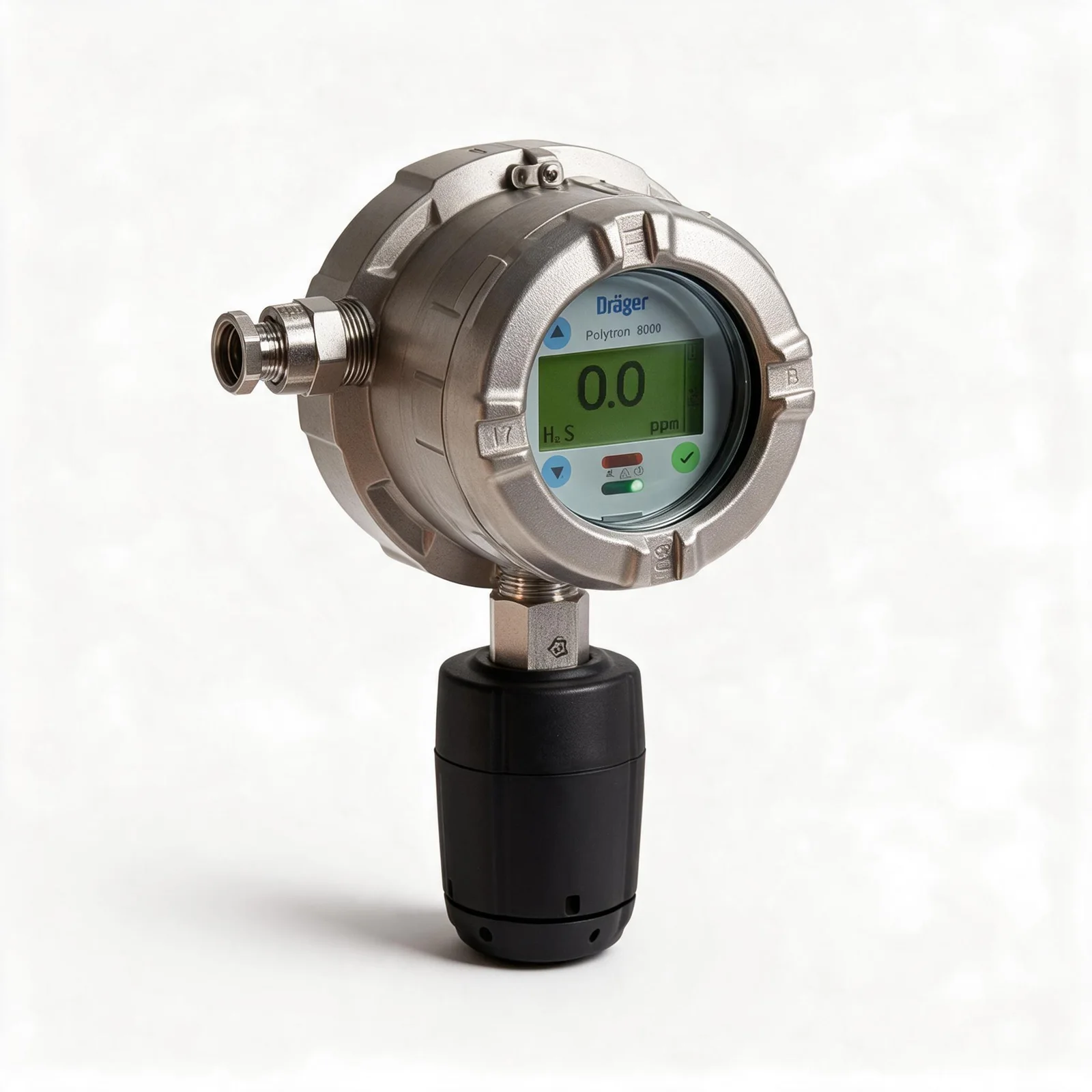
Dräger Polytron 8100 EC Fixed Gas Detector
Fixed electrochemical gas transmitter for selected toxic gases and oxygen, with analog, HART and fieldbus options.
Source-listed reference data
Model, technical values and commercial references below come from the supplied supplier sources captured for intake. Manufacturer sourcing, configuration, certification, stock, MOQ, price and lead time are confirmed before an order.
Single-product and multi-line requests use the same human-reviewed workflow.
01
Product overview
What this sourcing family is designed to organize.
The Polytron 8100 EC is a fixed transmitter for more than 100 electrochemical gas sensors. It offers a local backlit display, 4–20 mA signalling and optional digital communications. The final range and certification follow the installed sensor.
Gas Detection
02
Reference configurations
Intake categories from the linked source, pending exact model and SKU mapping.
01Polytron 8100 ECSource reviewed
03
Technical specifications
Source-listed values are shown as intake references and remain subject to configuration and supplier confirmation.
Attribute
Catalog value
Verification basis
Accuracy / sensitivity
Sensor-specific accuracy is not listed in the reviewed source
Source-listed — supplier confirmation required
Alarm / output
3-wire 4–20 mA with HART, Modbus or fieldbus; optional relays and backlit display
Source-listed — supplier confirmation required
Housing / ingress protection
Epoxy-coated copper-free aluminium or SS316L; IP65/66/67 depending on configuration
Source-listed — supplier confirmation required
Installation / sampling
Fixed installation with M20 or 3/4 in NPT cable entry
Source-listed — supplier confirmation required
Measurement range
More than 100 toxic gases and oxygen; exact range depends on the electrochemical sensor
Source-listed — supplier confirmation required
Product type
Fixed electrochemical gas detector
Source-listed — supplier confirmation required
RFQ verification check
Confirm gas and sensor range, display and relay options, transmitter material, communication protocol and destination-market approval
Source-listed — supplier confirmation required
Source brand
Dräger
Source-listed — supplier confirmation required
Source model
Polytron 8100 EC
Source-listed — supplier confirmation required
Source-listed certification
Source-listed ATEX, IECEx, UL, CSA, CE, EAC and SIL2 statements; exact model marking must be confirmed
Source-listed — supplier confirmation required
Supply / battery
10–30 VDC, 3-wire
Source-listed — supplier confirmation required
04
Inputs to include in the RFQ
The more of these inputs you can provide, the fewer rounds of clarification are needed.
01Target gas and expected concentration rangeRFQ input template Technical document pending
02Portable or fixed installation requirementRFQ input template Technical document pending
03Alarm, relay and control-system interfaceRFQ input template Technical document pending
04Required hazardous-area and calibration documentationRFQ input template Technical document pending
TECHNICAL PURCHASING Q&A
Dräger Polytron 8100 EC Fixed Gas Detector — procurement FAQs
Short answers to the technical and commercial checks buyers most often need before this family can be quoted accurately.
01Which sensor and interface choices drive a Polytron 8100 EC configuration?
The installed electrochemical sensor defines the target gas, measuring range and calibration basis, while the transmitter electronics define the available analog and digital interface. The RFQ should name the sensor code, gas range, output and control-system protocol, alarm concept, calibration accessories, mounting environment and required approval. Do not compare family-level sensor counts as if they were one generic detector.
02What must be specified before selecting the sensor and alarm setpoints?
State the target gas, expected concentration and units, possible cross-interferences, background atmosphere, temperature and humidity. Alarm setpoints must come from the approved site risk assessment and applicable requirements, not from a generic catalogue default.
03How should analog, digital and relay outputs be compared?
Start with the receiving system rather than the detector. Record the required 4–20 mA input, RS485 protocol and register map, relay action or alarm-panel interface, along with power, cable distance and failure behaviour. Confirm that the selected transmitter supports the requested output combination simultaneously.
04What calibration and installation evidence should accompany the quote?
Ask for the exact sensor, range, calibration certificate or basis, recommended bump-test and calibration interval, power and output details, enclosure protection and service-access requirements. For fixed equipment, also request the proposed mounting location and hazardous-area documentation needed for review.